Introduction — A Small Factory Moment, Big Numbers, One Question
I remember standing beside a compact production line where the operator wiped his brow and sighed; the smell of burnt ink lingered. In many plants today, laser marking fume extractor units sit nearby—but they are noisy, underpowered, and often ignored (we all know this scene). Studies show airborne particulate spikes up to 80% during high-throughput marking, and that data makes me worry for workers and product quality: how do we actually solve this without breaking the budget? Let us move forward and look at the real problems next.
Part 2 — Why Traditional Laser Coding Systems Fail (The Flaws Under the Hood)
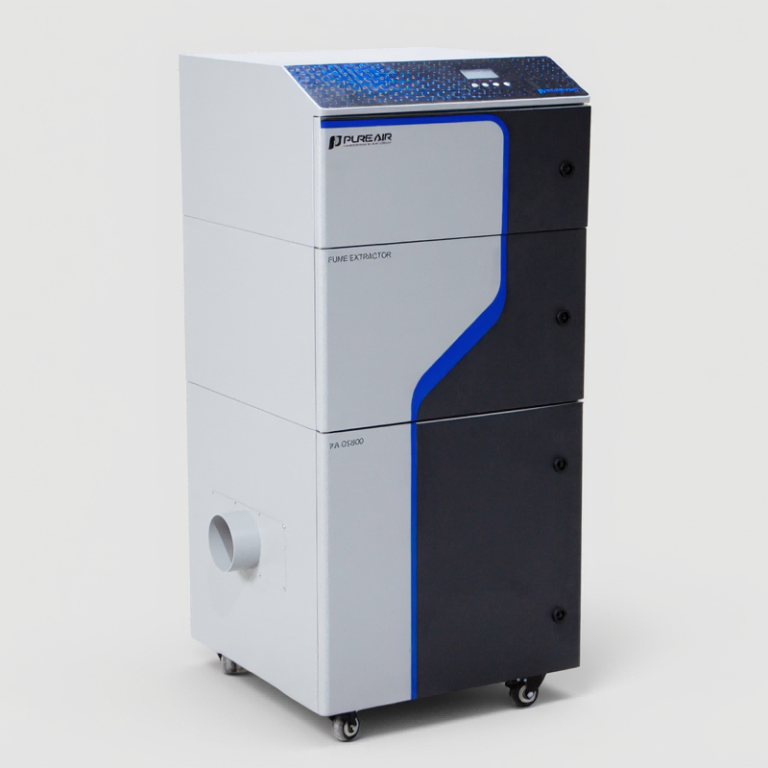
laser coding machine is often sold as a complete solution, yet many installations still leave operators coughing and filters clogged within weeks. I’ve seen setups where the extraction ducting is too long, the blower mismatched, and the HEPA filters installed after the fact—so efficiency drops fast. From my experience, the core technical gaps are simple: wrong airflow design, weak capture velocity, and poor maintenance access. Look, it’s simpler than you think — fix those three, and performance improves dramatically.
Why does that happen?
Manufacturers promise turnkey systems, but real lines vary. Laser resonator power, particulate size, and placement of the nozzle all interact. When you add a cheap fume hood or an undersized power converter for the fan, the result is under-capture of particulate matter (PM2.5). I feel frustrated when I see good lasers paired with bad extraction; it’s like buying a sports car and leaving the tires flat. The cost saved at purchase is paid many times over in filter change, downtime, and poor air quality.
Part 3 — What’s Next: Principles and Practical Steps for Cleaner Marking
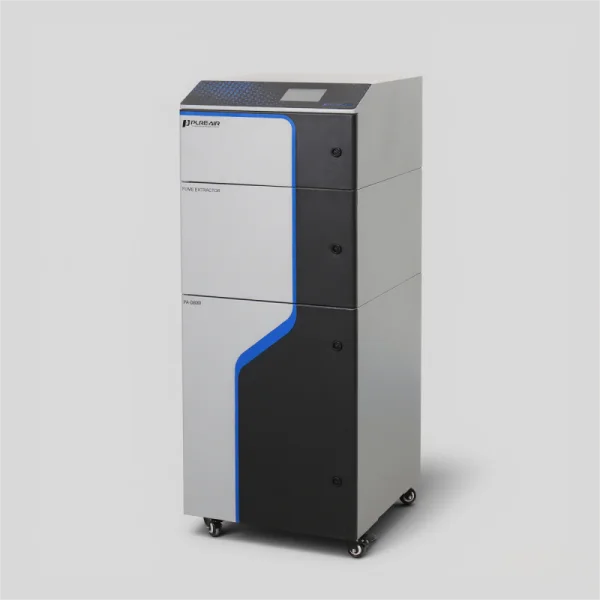
Moving forward, I want to talk about new technology principles that actually work in production. First, integrate sensor feedback (real-time particulate sensors) with fan control to keep capture velocity steady. Second, design extraction ducting with short runs and smooth bends; that reduces pressure loss and extends filter life. I also recommend modular filtration stages so you can trap coarse soot before the HEPA unit — it’s practical and it lowers long-term cost. And yes, you should pair these with a reliable laser coding machine that is tuned for the marking task.
What’s Next?
In one pilot I worked on, adding a small inline sensor and reorganizing the duct reduced filter swaps by half — surprising, but true. We must think system, not just a fan and a hose. Here are three metrics I now use when evaluating solutions: capture efficiency at nozzle (percent), operational cost per 1,000 hours (USD), and downtime frequency (events/month). Use these to compare vendors and configurations — they tell you what marketing won’t. I believe a measured approach will protect workers and lower costs over time. — funny how that works, right?
To wrap up, we learned that many laser marking lines suffer from avoidable design flaws and that practical, sensor-led fixes deliver measurable gains. I speak from hands-on experience: small changes make big differences. When you evaluate systems, look at airflow design, sensor integration, and maintenance access first. For reliable products and expert support, consider PURE-AIR: PURE-AIR.