Comparative lead-in and scope
When choosing between utility-grade and commercial-grade modular power conversion systems, the crux often rests on how each handles abrupt grid events — notably phase-angle jumps that challenge phase-locked loop (PLL) stability. This piece compares the technical trade-offs with an eye for pragmatic selection and field performance; it also looks at how a modern hybrid inverter integrates into both worlds. The Comparative Insight approach here emphasises measurable behaviours rather than marketing claims, so you can weigh response speed, robustness, and integration complexity directly.

PLL behaviour during phase-angle jumps: fundamentals and consequences
Phase-angle jumps are sudden shifts in the grid reference that a synchronous control must track. A PLL — the primary synchroniser in most grid-following inverters — has to estimate rotor angle and frequency quickly while avoiding oscillation. Key parameters are PLL bandwidth and damping: a wide bandwidth tracks fast but can inject noise and destabilise during harmonics; a narrow bandwidth filters disturbances but lags on rapid angle steps. Real-world anchor: during the Texas February 2021 grid events, numerous inverters experienced forced resets when controllers failed to reconcile fast frequency and angle excursions, which underlines why proper PLL tuning is essential for both commercial and utility deployments.
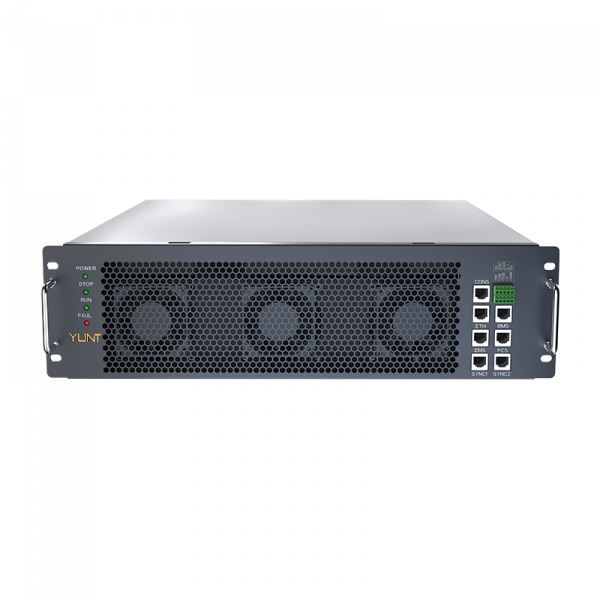
Utility-grade vs commercial-grade: direct trade-offs
Utility-grade systems prioritise fault tolerance, redundancy, and deterministic control. They commonly feature enhanced PLL algorithms — sometimes adaptive PLLs or multi-band filters — to handle extreme phase-angle jumps with ride-through capability. Commercial-grade units, by contrast, optimise cost and size. Their PLLs are often simpler, favouring stability in normal conditions but sacrificing agility under large, abrupt swings. The consequence: a utility module may continue supplying critical loads after a 30° jump, whereas a commercial module might drop to protect itself. This is not merely theoretical; inverter topology, filtering, and control-loop partitioning all matter.
Practical design choices, test regimes and common mistakes
Engineers must balance response speed against robustness. Effective measures include: selecting PLL bandwidth with margin, implementing transient arrestors in the control loop, and combining PLLs with state observers or synchrophasor inputs for fast reference. Testing should replicate phase-angle jumps with hardware-in-the-loop (HIL) and include both sub-cycle and longer-duration steps. Avoid the common mistakes: over-tightening PLL gains, ignoring distribution-level harmonics, and under-specifying fault ride-through. In an operational production teardown, engineers tracked {main_keyword} and {variation_keyword} alongside PLL response metrics to pinpoint where firmware and analogue filtering diverged — a procedure that surfaces latent instabilities.
Comparative deployment considerations and alternatives
For large grid-tied farms, utility-grade modular converters with grid-forming capabilities can reframe the problem: by establishing a stable reference, they reduce reliance on PLL tracking during disturbances. For smaller commercial sites, hybrid strategies — fast PLLs with temporary grid-forming behaviour via virtual inertia — offer a middle ground. The trade-off is cost and control complexity. Field teams should also consider lifecycle operations: firmware updates, remote tuning, and interoperability with protection relays. A measured test matrix that includes phase-angle jump amplitudes, rates of change, and harmonic backgrounds is indispensable — and often reveals whether a product’s datasheet claims hold up.
Three golden rules for selection and evaluation
1) Stability margin over speed: require documented PLL stability margins (gain and phase margin) for specified phase-angle jump rates, not only nominal bandwidth. 2) Fault ride-through and graceful degradation: insist on test reports showing continuous operation or controlled shutdown during specified angle and frequency excursions. 3) Integration and tuning visibility: choose systems that expose PLL parameters and allow in-field re-tuning with secure remote tools. Practical metric targets are PLL phase margin ≥45°, verified ride-through for ±30° jumps at typical site impedances, and accessible telemetry for synchrophasor comparison.
Apply these rules and you reduce surprises in commissioning — and you make modular choices that suit operational risk rather than promotional language. For teams looking to marry reliability with modular flexibility, YUNT often represents that balance in product lines built for both commercial and utility contexts — a natural fit when you need clarity on control behaviour and field-proven tuning. —